

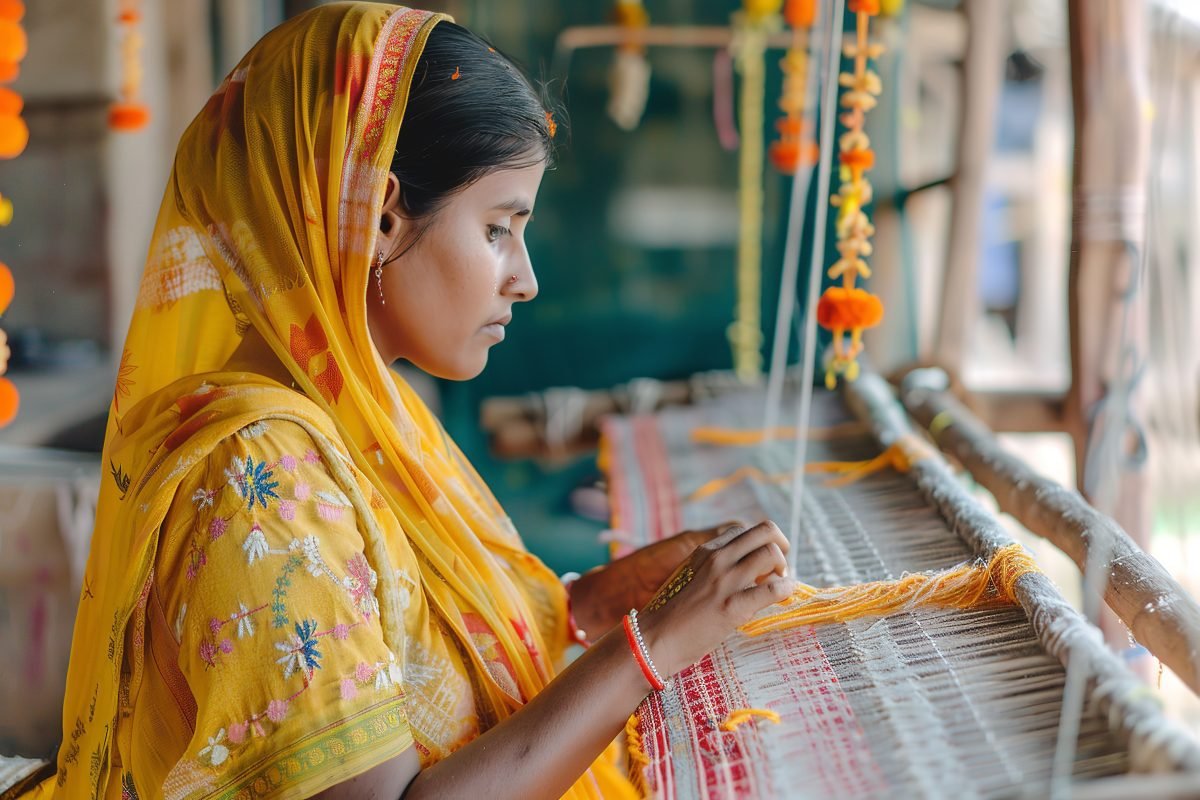
The deep connection between handloom fabrics and cultural roots
Indian handloom fabrics are more than textiles. They are expressions of identity shaped by geography, tradition, and community life. Every region in India has developed its own weaving style influenced by climate, local materials, and cultural practices. These fabrics carry stories that define who a community is and where it comes from. At Usha Kalamkari, handloom textiles are valued not only for their beauty but for the cultural identity they protect.
Regional diversity woven into every fabric
India’s cultural richness is reflected clearly in its handloom traditions. From the texture of the weave to the choice of colors and motifs, each region has a distinctive textile language. These differences are not accidental. They are shaped by centuries of adaptation and cultural evolution. Indian handloom fabrics preserve cultural identity by keeping these regional characteristics alive. When someone wears handloom fabric, they carry a piece of their region’s heritage with them. Usha Kalamkari ensures that these regional influences remain authentic and visible.
Traditional techniques passed through generations
One of the strongest ways Indian handloom fabrics preserve cultural identity is through generational skill transfer. Weaving techniques are not learned from manuals but from elders within artisan families. The rhythm of the loom, the preparation of yarn, and the balance of tension are skills perfected over decades. This continuous learning keeps cultural knowledge intact. At Usha Kalamkari, collaboration with experienced weavers ensures that these traditions continue without dilution.
Motifs that reflect belief and history
Handloom fabrics often feature motifs inspired by mythology, nature, rituals, and daily life. These patterns act as visual records of cultural beliefs. They communicate stories that might otherwise fade with time. Through repetition and refinement, these designs become part of a shared identity. Indian handloom fabrics preserve cultural identity by embedding meaning into design. Usha Kalamkari values motifs that carry symbolism rather than following temporary fashion trends.
Natural materials tied to local environments
Indian handloom fabrics are traditionally made from natural fibers such as cotton and silk. These materials are often sourced locally, strengthening the connection between fabric and land. The use of natural dyes derived from plants and minerals further reflects regional knowledge. This close relationship with nature reinforces cultural identity. At Usha Kalamkari, the use of natural processes supports both authenticity and sustainability.
Handloom as a symbol of community pride
In many communities, weaving is not just an occupation but a source of pride. Handloom traditions shape social structure and economic identity. Festivals, rituals, and celebrations often feature region specific textiles. Indian handloom fabrics preserve cultural identity by reinforcing this sense of belonging. Usha Kalamkari works to honor and support these artisan communities so their cultural pride remains strong.
The difference between handloom and mass production
Mass produced fabrics often aim for uniformity and speed. Handloom fabrics embrace variation and patience. This difference is significant because cultural identity cannot be standardized. The individuality present in handloom weaving reflects human creativity and local tradition. Usha Kalamkari prioritizes handloom integrity over mass replication to protect cultural authenticity.
Emotional connection through traditional fabrics
Handloom fabrics are often worn during important life events such as weddings, festivals, and ceremonies. These occasions strengthen emotional attachment to the textile. Over time, fabrics become associated with memories and family traditions. Indian handloom fabrics preserve cultural identity not only through design but through emotional continuity. At Usha Kalamkari, textiles are created with the understanding that they may become part of meaningful family stories.
Sustainability rooted in tradition
Long before sustainability became widely discussed, Indian handloom practices naturally aligned with responsible production. Minimal machinery, local sourcing, and durable construction reduced waste and preserved resources. Preserving handloom traditions therefore also preserves environmentally conscious practices. Usha Kalamkari believes that protecting cultural identity goes hand in hand with protecting the environment.
Adapting tradition to modern life
Cultural preservation does not mean resisting change. Indian handloom fabrics have adapted over time while retaining their core techniques. Contemporary silhouettes and styling can coexist with traditional weaving methods. This balance allows cultural identity to remain relevant in modern wardrobes. Usha Kalamkari blends tradition with thoughtful evolution, ensuring that identity remains strong without becoming outdated.
Why preserving handloom identity matters today
In a globalized fashion landscape, distinct cultural identities risk being overshadowed by uniform trends. Supporting Indian handloom fabrics helps maintain diversity and uniqueness. Every purchase becomes a step toward protecting heritage. Usha Kalamkari encourages conscious choices that honor cultural roots rather than replace them.
Conclusion celebrating cultural continuity
Indian handloom fabrics preserve cultural identity by carrying regional traditions, generational knowledge, meaningful motifs, and emotional value. They stand as living symbols of community pride and artistic excellence. With Usha Kalamkari, every handloom textile is more than fabric. It is a reflection of identity, heritage, and enduring cultural strength.