

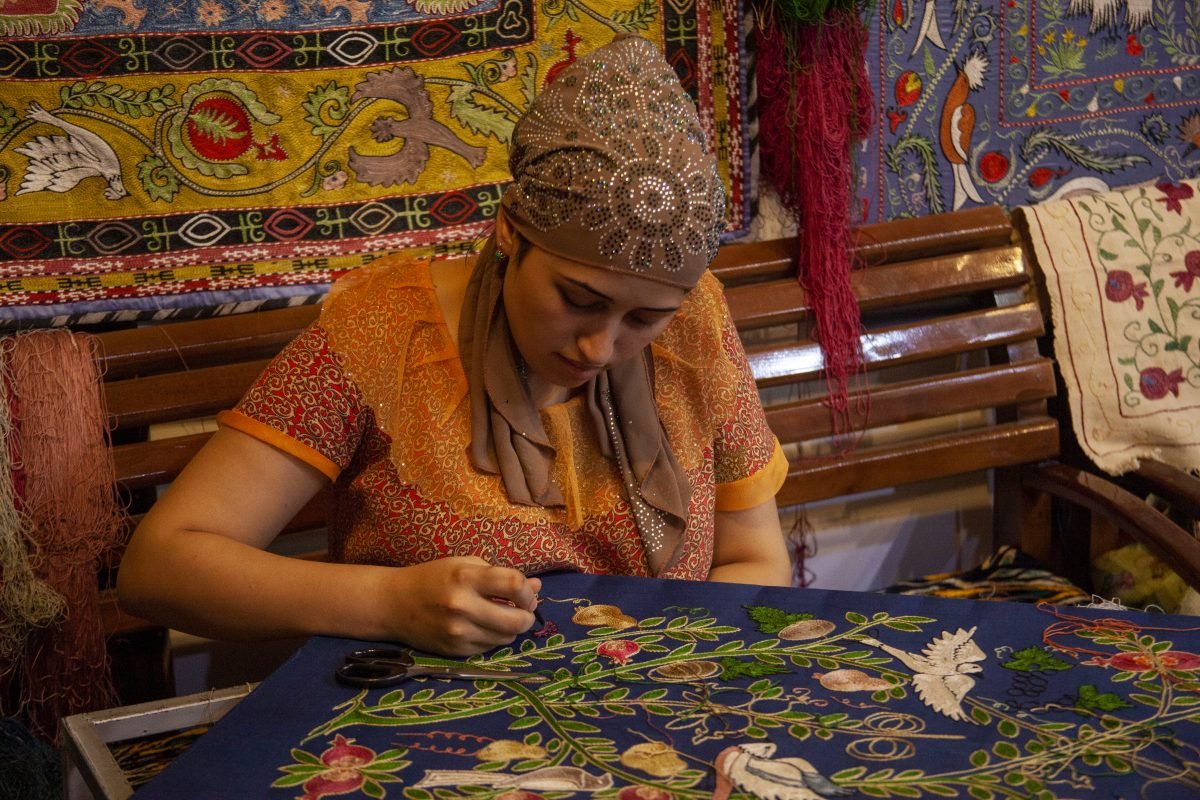
Understanding the depth of indian handloom heritage
The craft legacy that makes Indian handloom unique is rooted in centuries of tradition, skill, and cultural continuity. Handloom weaving in India is not a recent innovation. It is a living practice shaped by generations of artisans who have refined their techniques through observation and experience. Unlike mass produced textiles, Indian handloom fabrics carry the imprint of history in every thread. At Usha Kalamkari, this legacy is respected as a foundation rather than a marketing story.
Generational knowledge passed through hands
Indian handloom weaving survives because knowledge is transferred within families and communities. Young learners observe elders preparing yarn, setting the loom, and maintaining rhythmic precision. These skills are not rushed. They are absorbed over years of careful practice. This generational transmission is what makes Indian handloom unique. The fabric becomes a continuation of inherited wisdom. Usha Kalamkari collaborates with artisans who preserve this lineage with dedication.
Regional identity woven into every fabric
Each region in India has developed distinctive handloom traditions influenced by climate, culture, and available materials. From the texture of the weave to the choice of motifs, regional identity is visible in the fabric itself. This diversity strengthens the uniqueness of Indian handloom. No two weaving traditions are exactly alike. At Usha Kalamkari, preserving these regional distinctions ensures that authenticity remains intact.
The discipline of slow craftsmanship
Indian handloom weaving is guided by patience. Preparing the yarn, aligning the threads, and completing each row requires focus and rhythm. The slow process allows artisans to maintain quality and depth. This dedication to careful production stands in contrast to fast manufacturing. The craft legacy that makes Indian handloom unique lies in this disciplined approach. Usha Kalamkari values time as an essential element of excellence.
Motifs that carry cultural meaning
Indian handloom textiles often feature motifs inspired by mythology, nature, and everyday life. These patterns serve as cultural symbols passed down through generations. They preserve stories and beliefs within woven form. The presence of meaningful motifs adds depth to the fabric’s identity. At Usha Kalamkari, design choices are guided by heritage rather than short lived trends.
Human individuality in every weave
Handloom fabrics naturally display subtle variations in texture or alignment. These slight differences confirm human involvement and craftsmanship. Each piece carries a distinct personality. This individuality is a key reason why Indian handloom remains unique. Usha Kalamkari embraces these variations as marks of authenticity.
Natural materials enhancing legacy
Traditional handloom weaving often uses natural fibers such as cotton and silk. These materials breathe, adapt to the body, and age gracefully. Combined with traditional dyeing techniques, they enhance durability and comfort. The thoughtful use of materials strengthens the craft legacy. Usha Kalamkari prioritizes natural processes to maintain this authenticity.
Community pride and economic identity
Handloom weaving shapes the identity of entire communities. It is more than an occupation. It represents pride, skill, and cultural belonging. Supporting Indian handloom strengthens artisan communities and keeps traditions relevant. At Usha Kalamkari, collaboration with weavers ensures that this pride continues across generations.
Sustainability rooted in tradition
Long before sustainability became a global focus, Indian handloom practices naturally aligned with responsible production. Minimal machinery and local sourcing reduced environmental strain. This balance between craft and environment adds another layer to its uniqueness. Usha Kalamkari continues to honor these sustainable traditions.
Adaptation without losing core values
Indian handloom has evolved to meet modern preferences while preserving its core techniques. Contemporary styling can coexist with traditional weaving methods. This adaptability keeps the craft alive without diluting its identity. At Usha Kalamkari, innovation is introduced carefully so that heritage remains central.
Emotional connection through handloom textiles
Handloom fabrics often accompany important life events such as weddings and celebrations. Over time, they hold memories and emotional value. Families preserve them as heirlooms, strengthening generational bonds. This emotional dimension adds to the craft legacy that makes Indian handloom unique. Usha Kalamkari creates textiles that are worthy of becoming part of these personal histories.
Preserving uniqueness in a changing world
In a world driven by uniform production, Indian handloom stands apart as a symbol of individuality and cultural depth. Supporting handloom means preserving diversity and artistic integrity. Usha Kalamkari believes that maintaining this uniqueness is essential to protecting India’s textile heritage.
Conclusion honoring the craft legacy
The craft legacy that makes Indian handloom unique lies in generational knowledge, regional identity, meaningful motifs, disciplined craftsmanship, and emotional continuity. It is a living tradition shaped by dedication and pride. With Usha Kalamkari, every handloom textile becomes a celebration of heritage, authenticity, and enduring cultural strength.