

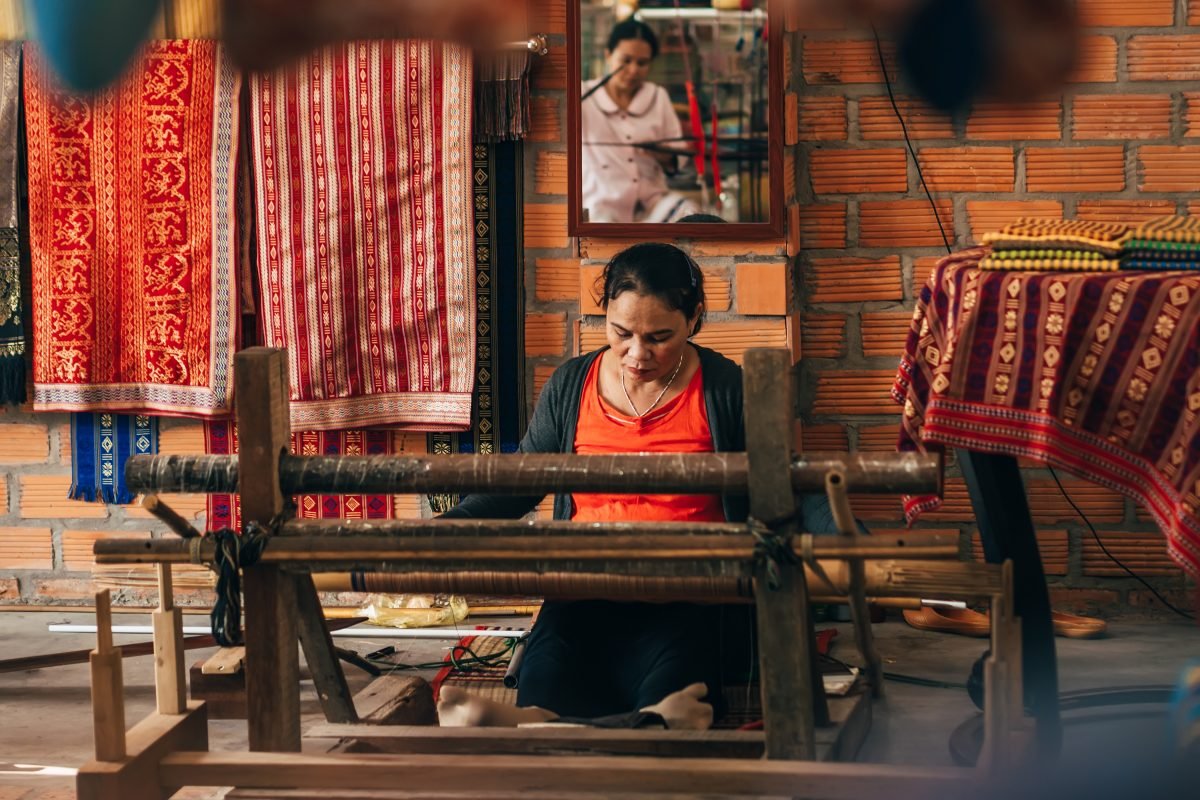
The roots of India’s handloom craft legacy
The enduring legacy of India’s handloom craft begins in small weaving communities where tradition is not taught from books but learned through practice. The loom has been a constant presence in Indian households for centuries, shaping livelihoods and preserving artistic expression. India’s handloom craft is not simply a production method. It is a living tradition that reflects resilience, patience, and cultural depth. At Usha Kalamkari, this legacy is honored as a foundation of authentic textile creation.
Generations of skill that sustain the craft
India’s handloom craft survives because knowledge is passed down through generations. Young weavers observe elders preparing yarn, adjusting threads, and maintaining rhythm at the loom. This transfer of skill ensures continuity without compromising authenticity. The enduring legacy of India’s handloom craft lies in this generational strength. Usha Kalamkari collaborates with artisans who carry forward this inherited expertise with dedication and pride.
Regional identity woven into every thread
Each region in India contributes unique weaving styles shaped by climate, culture, and available materials. The texture, motifs, and weaving techniques vary significantly from one area to another. This regional diversity strengthens the identity of India’s handloom craft. It prevents uniformity and celebrates individuality. At Usha Kalamkari, preserving these regional distinctions ensures that authenticity remains visible in every textile.
The discipline of slow craftsmanship
Handloom weaving requires time and focus. Preparing yarn, aligning threads, and completing intricate patterns cannot be rushed. This disciplined process builds durability and depth into the fabric. The enduring legacy of India’s handloom craft is sustained by patience rather than speed. Usha Kalamkari values this unhurried approach because it protects quality and meaning.
Motifs that preserve cultural memory
Traditional handloom textiles often feature motifs inspired by mythology, nature, and everyday life. These patterns serve as visual storytellers of cultural belief and history. By continuing to weave these motifs, artisans preserve India’s collective memory. India’s handloom craft therefore carries heritage within design. Usha Kalamkari emphasizes meaningful motifs to maintain cultural continuity.
Human touch as a mark of authenticity
Unlike machine made textiles, handloom fabrics reveal subtle variations that confirm human involvement. These slight differences in weave or alignment add character and uniqueness. The human presence behind each piece strengthens its value. Usha Kalamkari celebrates these natural variations as proof of genuine craftsmanship.
Natural materials supporting tradition
India’s handloom craft traditionally uses natural fibers such as cotton and silk. These materials breathe, soften over time, and age gracefully. Combined with traditional dyeing practices, they enhance both comfort and durability. At Usha Kalamkari, natural materials are prioritized to preserve authenticity and sustainability.
Community pride and economic strength
Handloom weaving shapes the social and economic identity of many communities. It provides livelihoods while reinforcing cultural pride. Supporting handloom craft ensures that these communities continue to thrive. The enduring legacy of India’s handloom craft depends on collective support and appreciation. Usha Kalamkari works with artisans respectfully to sustain both skill and dignity.
Sustainability rooted in tradition
Long before sustainability became a global concern, India’s handloom craft practiced responsible production. Minimal machinery and thoughtful resource use were inherent aspects of the tradition. This natural balance between craft and environment strengthens its relevance today. Usha Kalamkari continues to honor these sustainable principles.
Adapting legacy to modern expression
A legacy remains enduring when it adapts without losing its essence. India’s handloom craft has evolved in color, application, and styling while preserving its core techniques. This thoughtful evolution keeps the craft alive in contemporary wardrobes. At Usha Kalamkari, tradition is blended carefully with modern expression to maintain authenticity.
Emotional continuity through handcrafted textiles
Handloom textiles often become part of significant life events such as weddings and festivals. Over time, they hold memories and emotional value. Families preserve them as heirlooms, strengthening generational bonds. This emotional dimension reinforces the enduring legacy of India’s handloom craft. Usha Kalamkari creates textiles intended to become part of these lasting stories.
Preserving heritage in a changing world
In a rapidly globalizing fashion landscape, maintaining distinct cultural traditions is essential. India’s handloom craft stands as a symbol of artistic integrity and heritage. Supporting it helps protect diversity and craftsmanship. Usha Kalamkari believes that preserving this legacy is vital to sustaining India’s cultural identity.
Conclusion honoring the enduring legacy
The enduring legacy of India’s handloom craft lies in generational knowledge, regional diversity, meaningful motifs, disciplined craftsmanship, and emotional continuity. It represents resilience, artistry, and cultural strength. With Usha Kalamkari, every handloom textile carries forward a heritage that continues to inspire and endure.